
The Problem
In modern software organizations, many developers, many repositories, many services, and AI-assisted development produce ever larger volumes of code, pull requests, and changes.
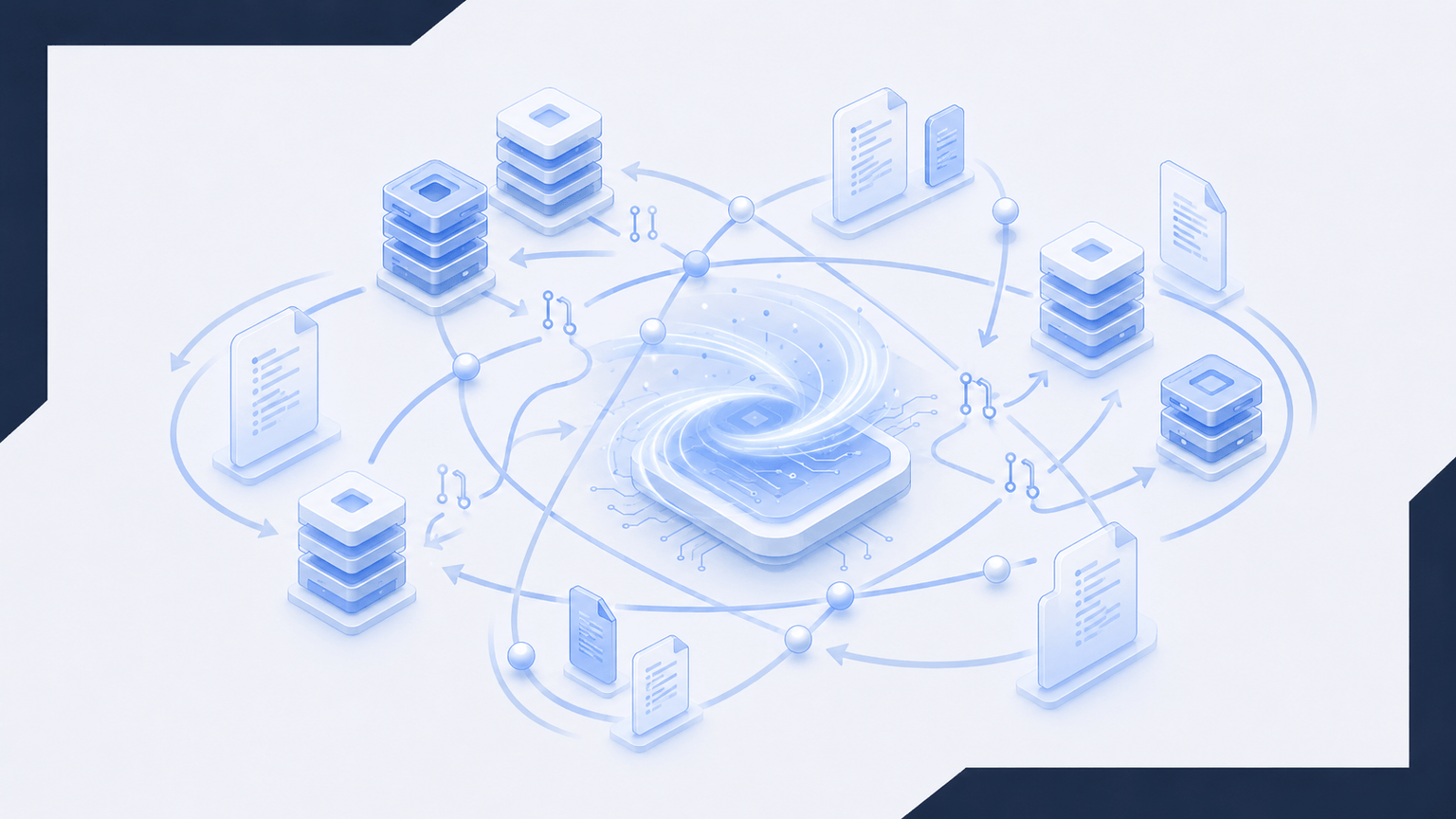
AI can significantly increase the output of developers. But that does not automatically mean that quality, architecture understanding, and long-term maintainability go up too.
Typical problems
- a very high number of commits and pull requests
- many AI-generated code changes
- hard-to-trace architecture changes
- missing or outdated documentation
- unclear service ownership
- decisions scattered across Jira, pull requests, chats, or wikis
- no overview of dependencies between services
- code bases too large for direct AI contexts
- humans lose track of what actually happened
- AI assistants have no controlled, current architecture context
The central concern
Output rises massively, but human control over architecture, quality, and system understanding gets lost.
Classic solutions like wikis, Confluence pages, or isolated READMEs are not enough for this pace:
- They are maintained manually and become outdated.
- They are separated from the code and are not versioned with it.
- They are neither machine- nor AI-readable.
- They have no connection to PRs, commits, and releases.
What is needed
What a modern software organization needs in the AI era is:
- Versioned architecture documentation that travels with the code.
- Reviewable documentation changes that are checked in the PR process.
- Machine-readable metadata about services, owners, and dependencies.
- Central visibility across all repositories and teams.
- Controlled AI context that stays citable and verifiable.
This is exactly where AURA comes in.
Continue reading
- Next page: The Idea — how AURA addresses the problem conceptually
- Architecture — what the target picture looks like
- PR Check — how AURA recognizes and enforces documentation requirements