
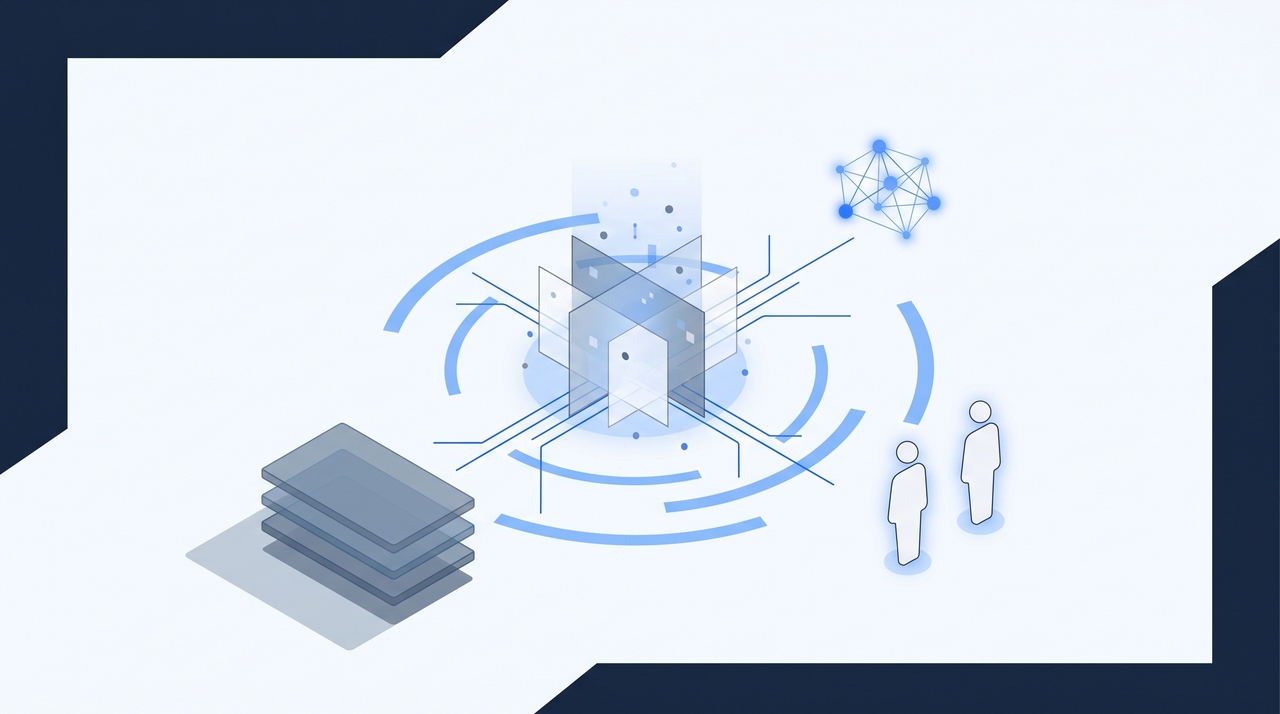
„More throughput, hardly more shared system understanding — that's where you need a control layer.“
Mara Lindholm, CTO at Northstar Systems
AURA is the architecture context layer for software organizations where repositories, services, and AI-assisted pull requests grow faster than the shared system understanding.
Why it matters
More speed needs more orientation.
AI assistants increase the throughput of changes. Teams therefore need an architecture view that is updated just as quickly while still remaining under human control.
Workflow
How AURA works
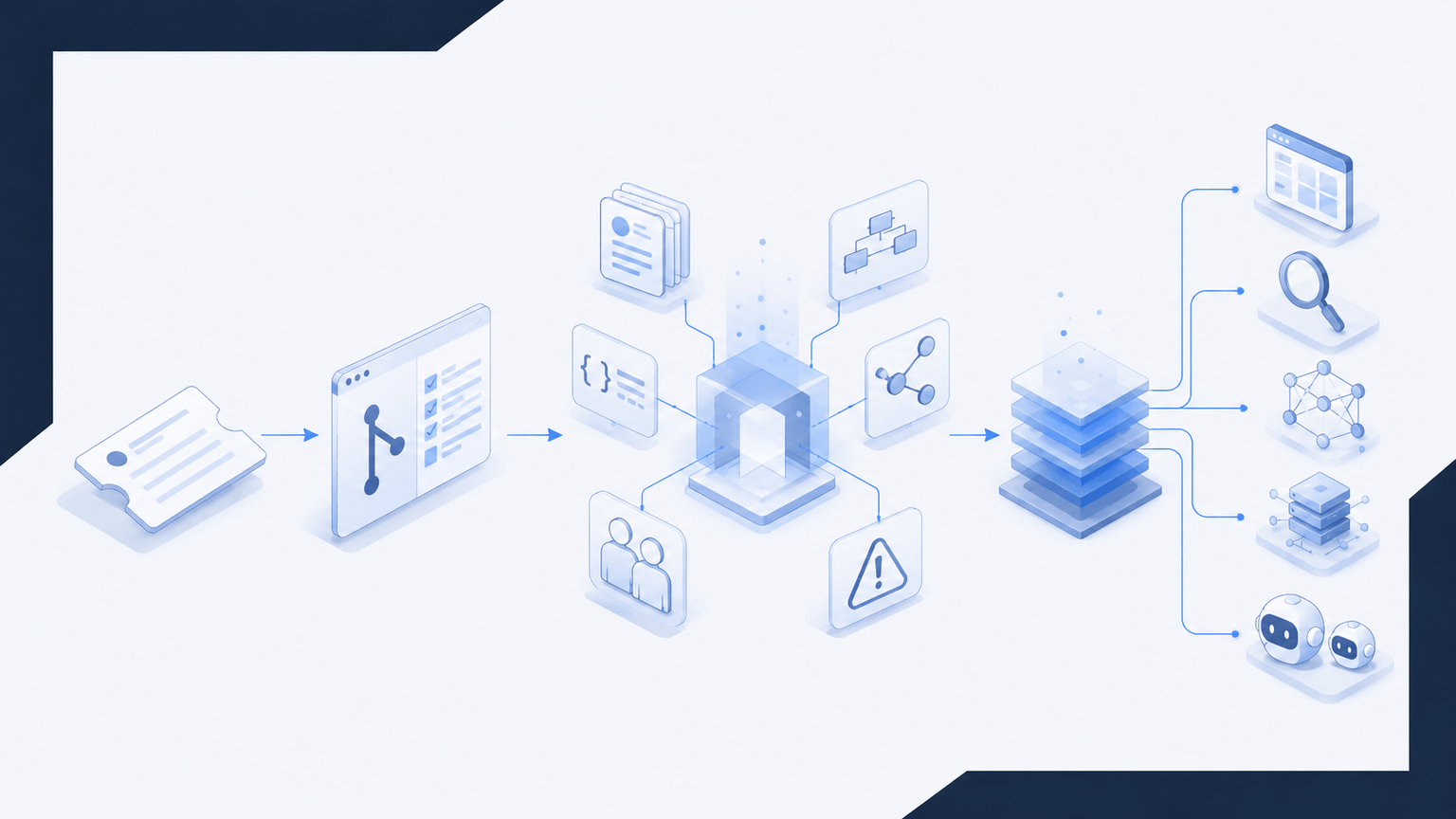
A feature starts in a ticket and ends up in a pull request. AURA checks there whether relevant architecture information was changed too: ADRs, C4 models, APIs, dependencies, ownership, and drift risks.
After the merge, AURA produces an architecture snapshot from the result. That snapshot feeds the portal, search, service graph, MCP server, and AI assistants.
Building blocks
Four parts, one context system
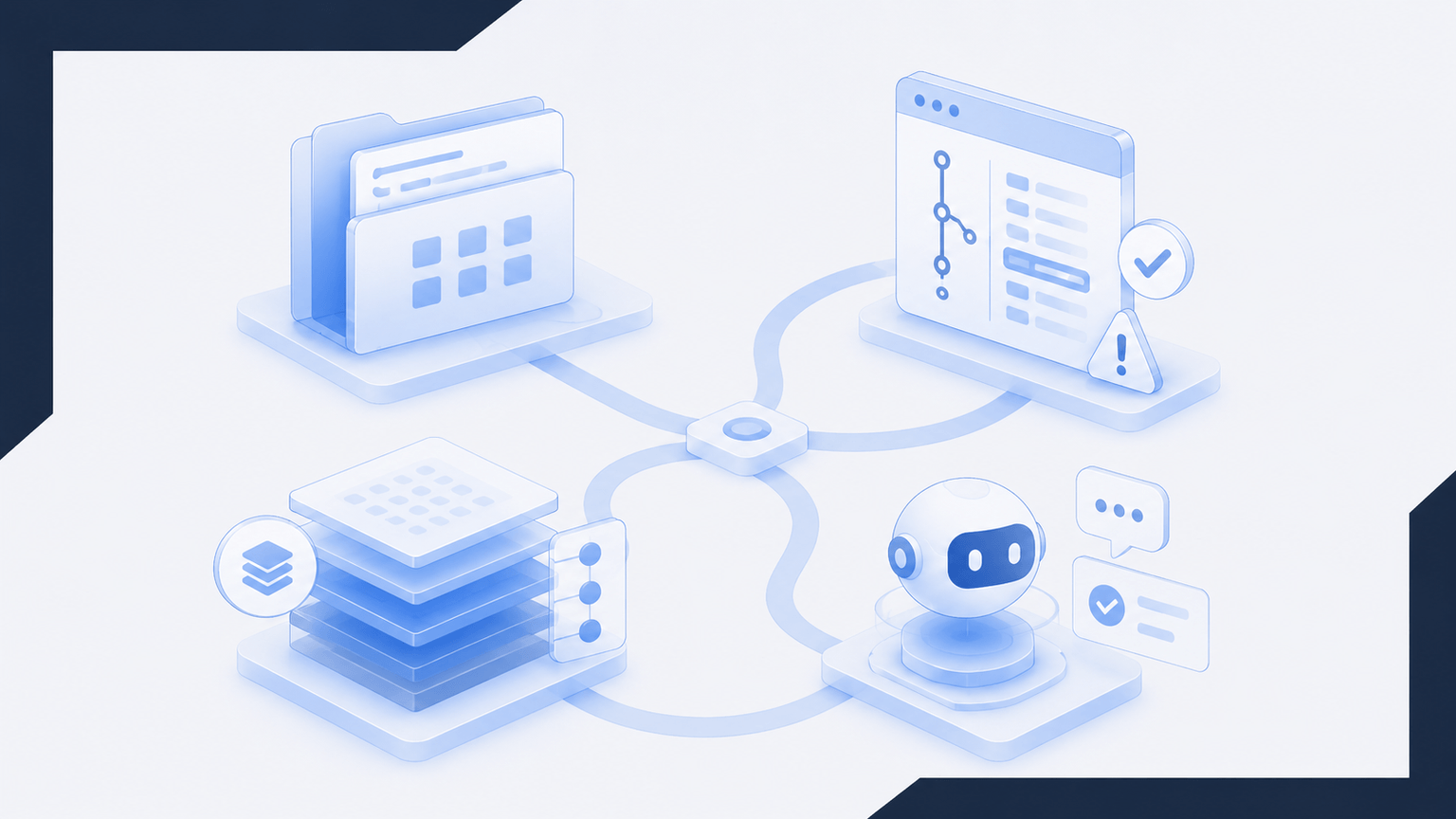
Repository Standard: teams document architecture in a clear, repeatable structure.
PR Check: AURA detects whether architecturally relevant changes slip through without matching documentation.
Knowledge Store: after the merge, a versioned, central knowledge base emerges.
AI Context Layer: AI assistants receive verified, citable information instead of guessed context.
Audiences
For everyone who needs to understand systems
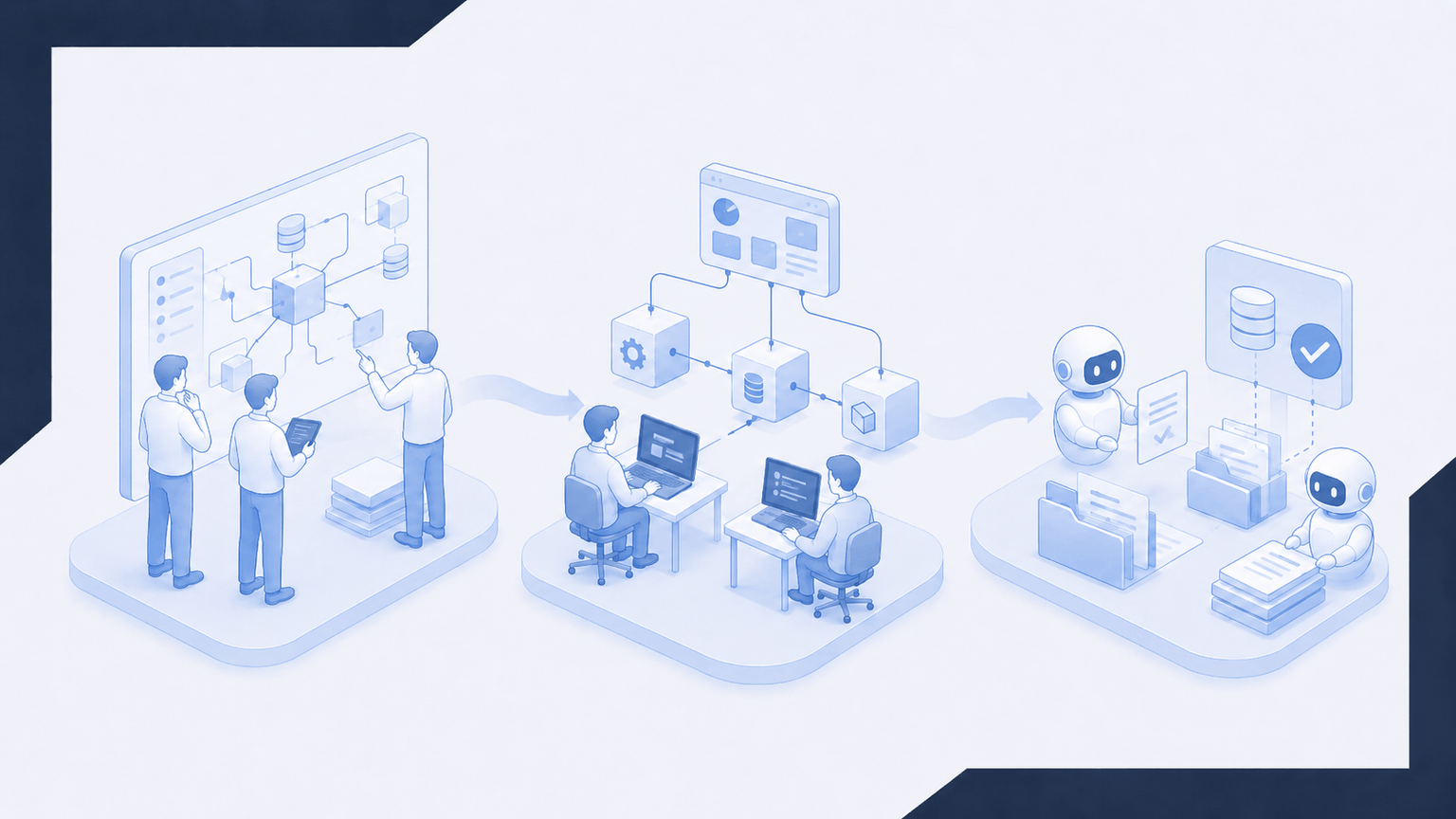
Architects and tech leads see which systems exist, how they are connected, and which decisions apply.
Engineering teams recognize during planning and implementation which services, APIs, and dependencies are affected.
AI assistants work with verified context from repositories instead of building an uncertain picture from scattered files.
Core principles
The truth lives in the repo.
The portal shows the central view, but the source remains versioned code and documentation.
Documentation becomes reviewable.
Architecture changes are reviewed at the same moment as code changes.
Humans stay in control.
AI helps with finding, checking, and summarizing. Decisions remain traceably human.
Rollout happens in stages.
First hints, then warnings, then hard gates for critical architecture surfaces.
Boundaries
What AURA is not
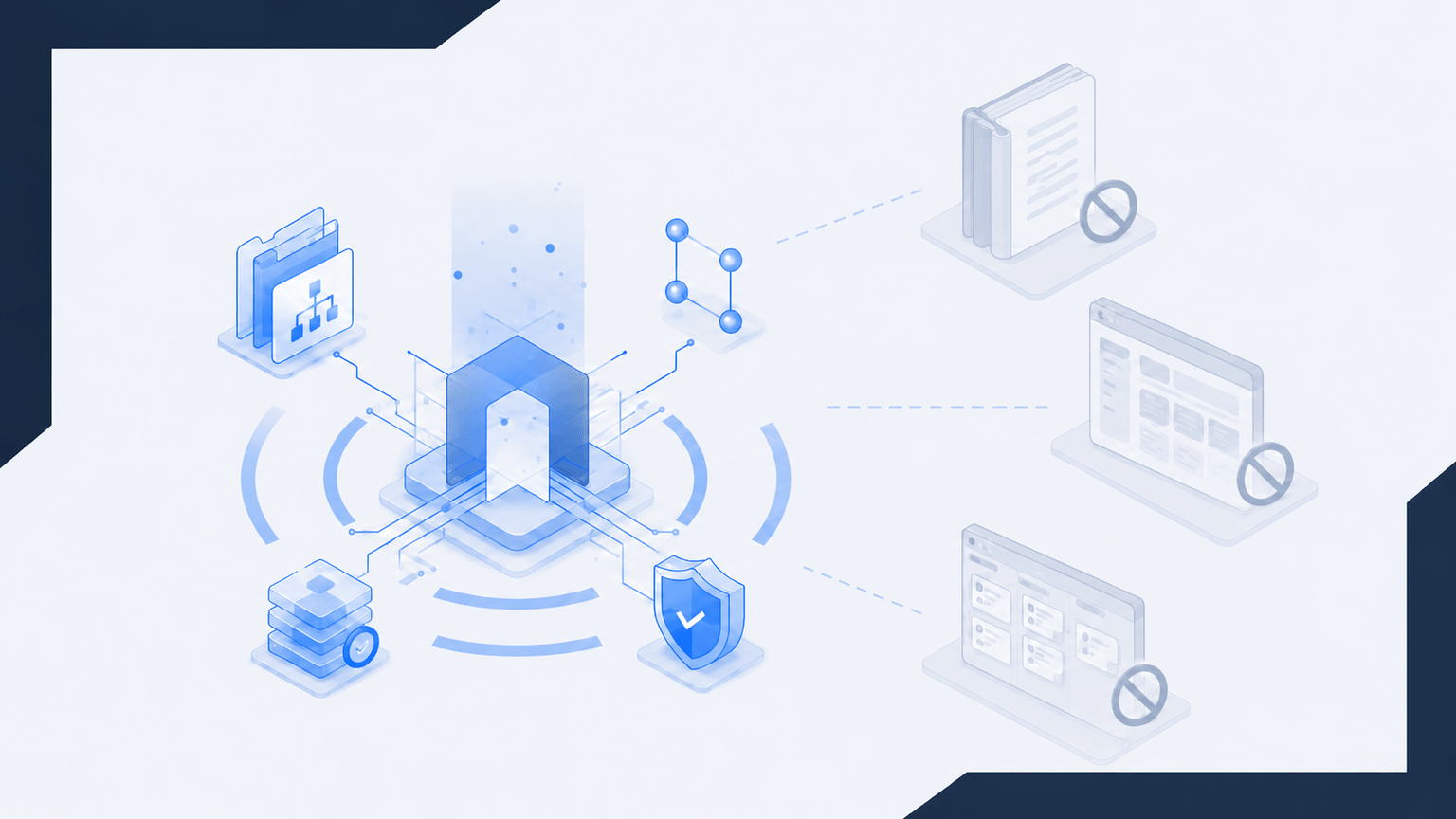
Not a classic wiki: AURA is repo-native, versioned, and CI-validated.
Not just a developer portal: AURA extends service catalogs with PR checks, drift detection, and AI context.
Not a Jira replacement: Jira describes work. AURA describes architecture, impact, and context.
Understand the problem first.
Why isn't a wiki enough anymore when AI increases development throughput and system boundaries blur faster and faster?